
Cataract Care
A high percentage of people over the age of 60—and many younger individuals as well—develop cataracts that gradually impair their vision. Currently, there is no medication that can prevent, reverse, or dissolve a cataract. Once a cataract begins to interfere with daily activities such as reading, driving, or seeing clearly at night, the only effective treatment is surgical removal.
Fortunately, cataract surgery has changed dramatically over the past several decades. In your parents’ or grandparents’ generation, the procedure required a hospital stay and was often delayed until the cataract became “ripe,” a term that is no longer relevant. Today, cataract surgery is a quick outpatient procedure that typically takes only a few minutes and is one of the safest and most successful operations performed in medicine.
The decision to have cataract surgery is based primarily on how much your vision affects your quality of life—not simply on the presence of a cataract. If your vision remains clear and you have few symptoms, surgery may not be necessary. After a comprehensive eye examination, you and your doctor of optometry will discuss your symptoms, evaluate your visual needs, and determine whether cataract surgery is the right choice for you. We encourage you to ask questions so you feel comfortable and well informed before making your decision.
At Omni Eye Services, our experienced cataract surgeons—Dr. Woodard, Dr. Yadgarov, and Dr. Patel—perform state-of-the-art cataract surgery using the latest techniques and technology to help patients achieve the best possible results.
Cataract surgery is for those who:
- believe that their quality of life has been impaired by poor vision, glare, distortion of colors, inability to read or drive, etc.
- have been diagnosed with cataracts by their doctor of optometry or other doctor in the past

What to expect on surgery day:
(also refer to Frequently Asked Questions by scrolling to the bottom of this page!)
You will arrive at the surgery center about an hour or two prior to your procedure, depending on the testing that needs to be done. Some patients will require a complete eye exam if they have not been seen at Omni before surgery day. Other patients who are coming in to have their second eye done will need their first eye checked.
Please do not wear eye makeup or jewelry on surgery day. Take off false eyelashes.
Patients and family should plan on spending 3 to 4 hours at the surgery center. The surgery only takes a few minutes but it is a process of check-in, pre-op history and vitals, meeting with anesthesia, etc. You will be given IV sedation but you will not be put to sleep. Because of this, you must bring a driver with you on the day of surgery, or surgery will be cancelled. The driver/responsible party needs to stay on premises for the entire time. The next day, you may be able to drive yourself to your one-day post-op check with your doctor of optometry.
Eye drops (a local anesthetic) will be used to completely numb your eye. An eyelid holder will be placed between your eyelids to keep you from blinking during the procedure. Small incisions in the cornea (front of the eye) will be made and a either a laser or an ultrasonic probe will be used to break up the cataract into microscopic particles.
The cataract particles will be gently suctioned away. Then, a folded intra-ocular lens (IOL) will be inserted through the micro-incision, then unfolded and locked into permanent position. The small incision is “self-sealing” and usually requires no stitches. It remains tightly closed by the natural outward pressure within the eye. This type of incision heals quickly and provides a much more comfortable recuperation.
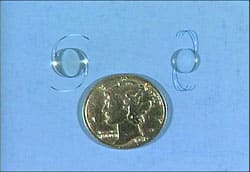
natural lens of the eye.

bag of the eye.
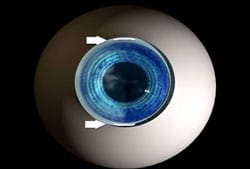
If your eye has pre-existing astigmatism over a certain amount, you will be offered a TORIC IOL,
a lens placed inside your eye to correct for astigmatism. There is an extra charge for this lens that insurance does not cover. The surgeon can also reduce or eliminate small amounts of astigmatism using the LenSx Femtosecond Laser, for the best distance vision possible. There is an out-of-pocket charge for the laser, and you will still need to wear reading glasses.
During your 20-30 minute stay in the recovery area, you will be instructed on the care of your eye. No heaving lifting over 20 pounds, no swimming pools, and no aggressive activities like golf or swimming for several weeks after. You will be given a plastic shield to wear over your eye just at bedtime, but you will leave with no patch, shield or stitches.
Then it is time to get something to eat, take a nap, and relax for the rest of the day. Everyone heals at different rates, but many patients report improvement in their vision almost immediately after the procedure. Most patients return to their normal activities within a day or two, many returning to work the next day.
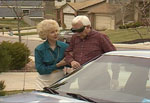
You will need to be seen the next day, either by your doctor of optometry or a doctor at Omni. The rest of the post-op visits will be discussed with you at that time.
Realistic expectations:
The decision to have cataract surgery is an important one that you will make along with your referring family Doctor of Optometry. The goal of any vision restoration procedure is to improve your vision. Once removed, cataracts will not grow back. Months after surgery, some patients may experience clouding of vision similar to when the cataract developed. This could be a sign of Posterior Capsular Opacification, a clouding of your thin tissue, called the capsular bag, that holds the intra-ocular lens. In most cases, a laser is used in-office to painlessly open the clouded capsule and restore clear vision with a procedure called a capsulotomy. Serious complications with cataract surgery are extremely rare. It is a safe, effective and permanent procedure, but like any surgical procedure, it does have some risks. Omni surgeons like Drs. Woodard, Yadgarov, and Patel perform a large number of procedures and are ready for any unexpected turns, which can significantly minimize the risks involved with cataract surgery.